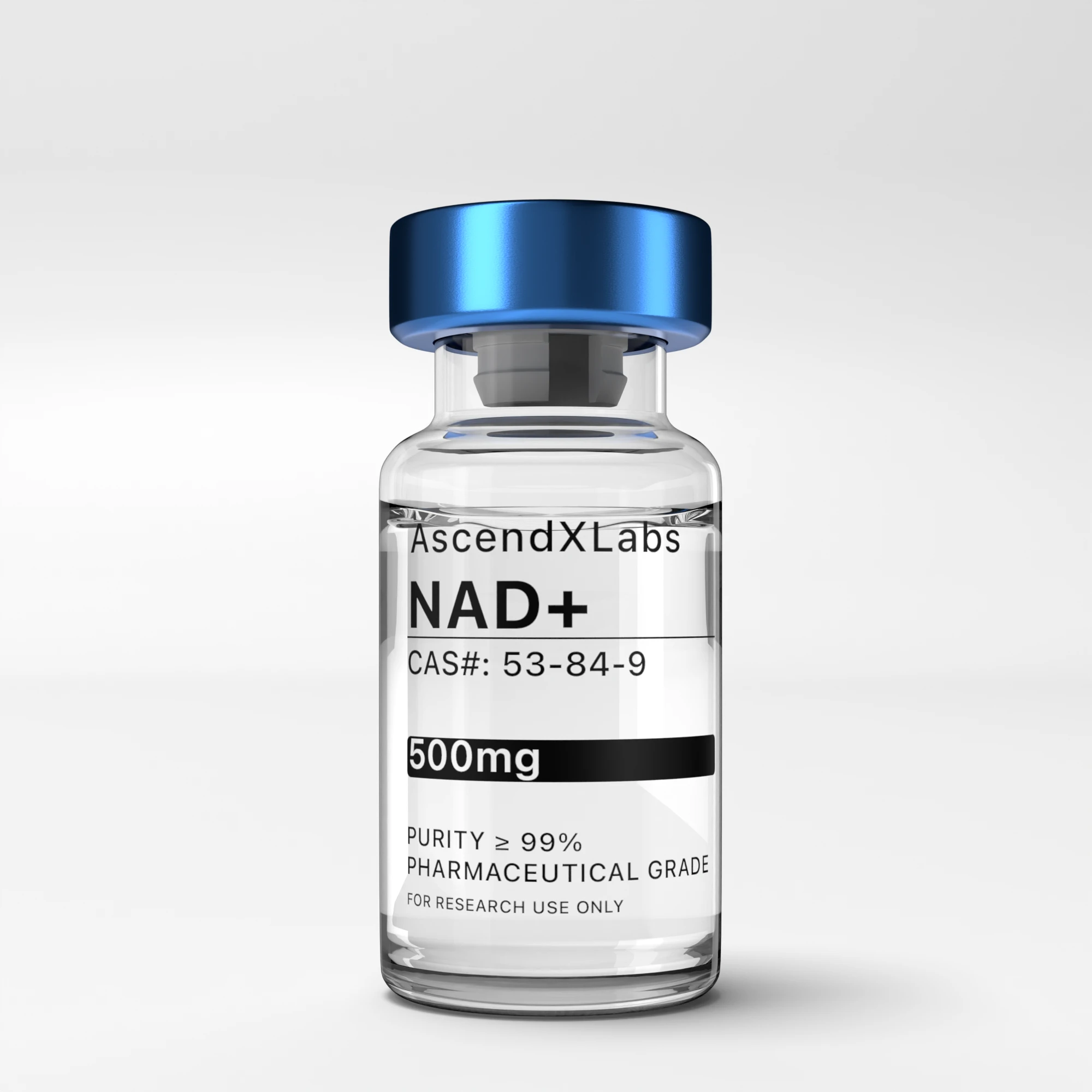
NAD+ 500MG
NAD+ (Nicotinamide Adenine Dinucleotide) is a naturally occurring coenzyme utilized in research applications across biological, biochemical, and pharmacological disciplines. Due to its central role in cellular metabolism and energy production, NAD+ serves as an important research tool for investigating metabolic pathways, cellular signaling mechanisms, and age-related biological processes in controlled academic and institutional settings.
Research Context
NAD+ is an essential cofactor involved in numerous enzymatic reactions, including those related to cellular respiration, DNA repair, and mitochondrial function. Researchers employ NAD+ in preclinical studies to explore its influence on metabolic regulation, redox balance, and cellular homeostasis. Its biological significance has made it a valuable compound for examining mechanisms associated with aging, energy metabolism, and cellular stress responses.
Research Overview
As a research-use-only compound, NAD+ is widely utilized in studies focused on cellular bioenergetics, enzymatic activity, and molecular signaling pathways. Researchers investigate its role in supporting the function of enzymes such as sirtuins and poly(ADP-ribose) polymerases (PARPs), which are involved in gene regulation, DNA maintenance, and cellular adaptation to stress. NAD+ is particularly relevant in fields including molecular biology, biochemistry, pharmacology, and aging research.
Key Research Focus Areas
-
- Cellular Bioenergetics: Investigation of metabolic pathways involved in ATP production, mitochondrial activity, and energy homeostasis.
-
- Aging and Longevity Research: Examination of NAD+-dependent processes associated with cellular aging, senescence, and metabolic health.
- DNA Repair Mechanisms: Analysis of NAD+-related enzymatic activity involved in genomic stability, DNA damage response, and cellular maintenance.
- Redox Biology Studies: Exploration of oxidation-reduction reactions and their influence on cellular function and stress adaptation.
- Molecular Signaling Pathways: Assessment of NAD+-dependent signaling networks, including sirtuin-mediated regulation and cellular stress responses.
- Mitochondrial Function Research: Investigation of the relationship between NAD+ availability and mitochondrial efficiency in experimental models.
Cautionary Notes
The use of NAD+ in research settings requires adherence to established institutional guidelines, laboratory safety protocols, and ethical standards. Researchers should conduct all studies using appropriate controls, validated methodologies, and approved experimental procedures to ensure the integrity and reproducibility of results. This compound is intended solely for academic and institutional research purposes and must not be distributed or utilized outside authorized research environments.
For research use only. Not for human or animal consumption.