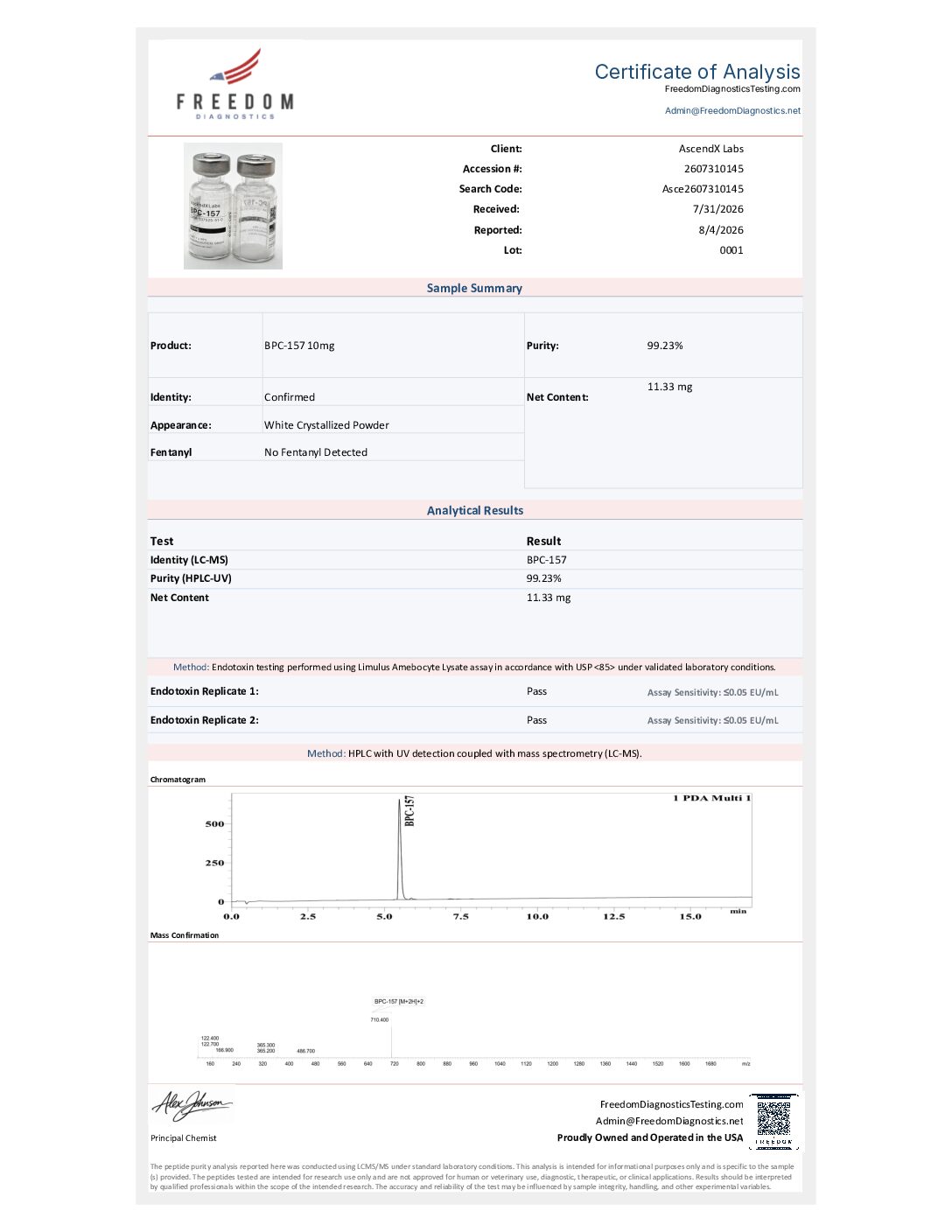
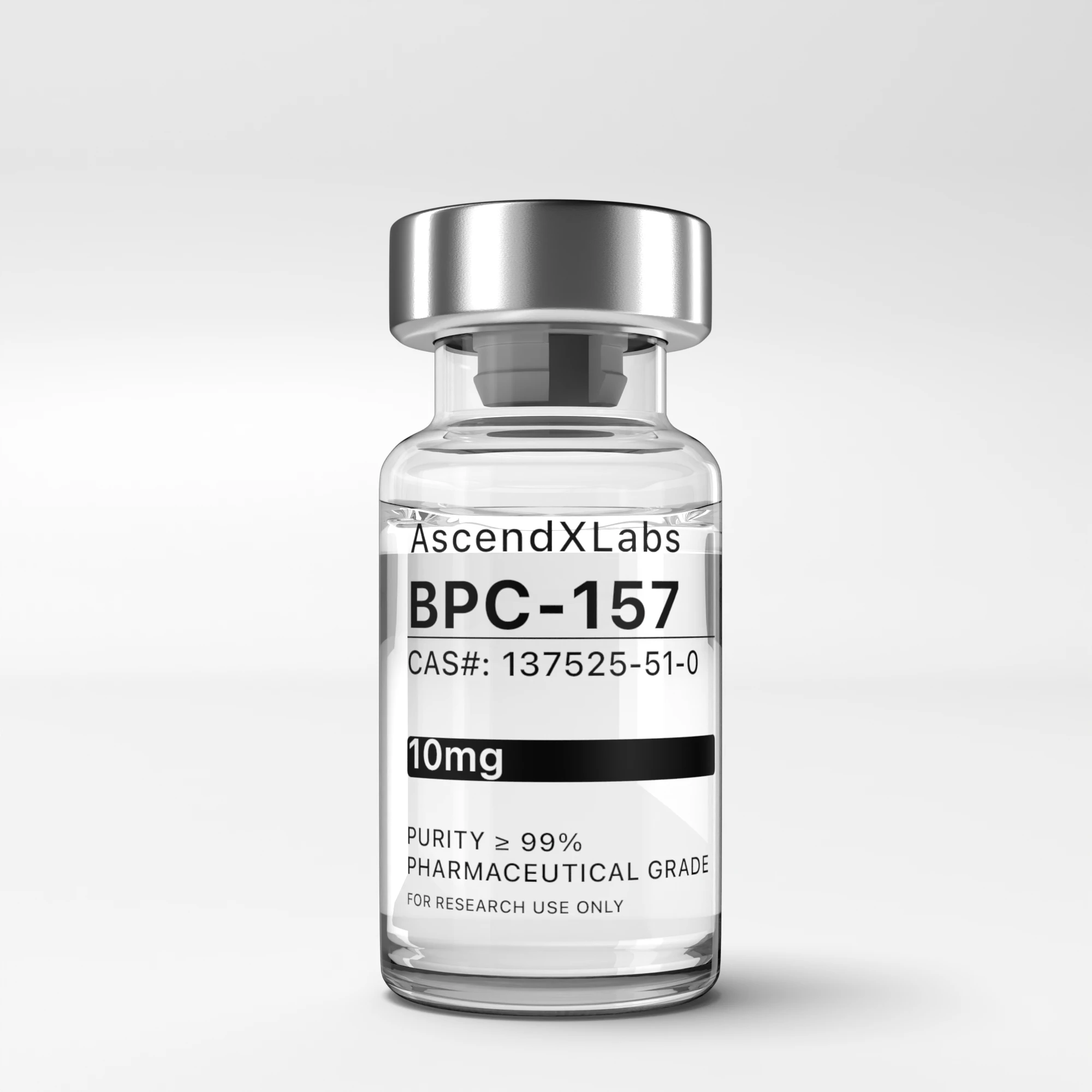
BPC-157
BPC-157 is a synthetic research peptide utilized in laboratory and preclinical research settings across biological, biochemical, and pharmacological disciplines. Due to its relevance in experimental models involving cellular response, peptide signaling, and tissue-related research pathways, BPC-157 serves as a research tool for investigating molecular mechanisms under controlled academic and institutional conditions.
Research Context
BPC-157 has been studied in experimental research models for its interaction with biological pathways associated with cellular signaling, tissue response, angiogenesis-related mechanisms, and inflammatory modulation. Researchers employ BPC-157 in controlled studies to explore its potential role in cellular adaptation, recovery-related pathways, and peptide-mediated biological activity within preclinical environments.
Research Overview
As a research-use-only compound, BPC-157 is commonly investigated in studies focused on peptide biology, cellular repair mechanisms, gastrointestinal research models, vascular response pathways, and molecular signaling activity. Its research relevance has made it a compound of interest in fields such as molecular biology, pharmacology, regenerative research, and biochemical pathway analysis.
Key Research Focus Areas
- Peptide Signaling Research: Investigation of peptide-related biological signaling pathways and cellular response mechanisms.
- Tissue Response Studies: Examination of experimental models related to cellular repair, tissue integrity, and structural maintenance.
- Gastrointestinal Research Models: Analysis of biological pathways associated with gastrointestinal tissue function and cellular protection mechanisms.
- Angiogenesis-Related Research: Exploration of vascular response pathways and mechanisms associated with blood vessel formation in preclinical models.
- Inflammatory Pathway Studies: Assessment of molecular processes involved in inflammatory signaling and cellular stress responses.
- Cellular Adaptation Research: Investigation of how experimental systems respond to peptide exposure under controlled laboratory conditions.
Cautionary Notes
The use of BPC-157 in research settings requires adherence to established institutional guidelines, laboratory safety protocols, and ethical standards. Researchers should conduct all studies using appropriate controls, validated methodologies, and approved experimental procedures to ensure the integrity, accuracy, and reproducibility of results. This compound is intended solely for academic and institutional research purposes and must not be distributed or utilized outside authorized research environments.
For research use only. Not for human or animal consumption.